A collection of works by an artist
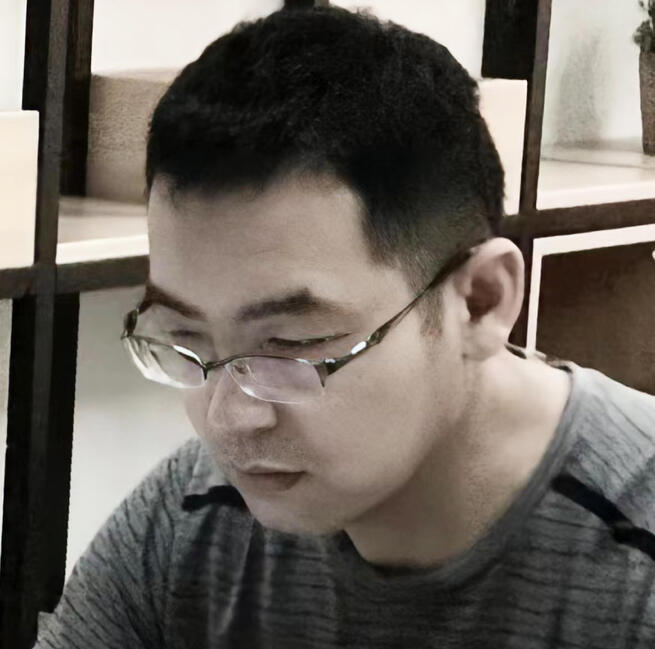
Miao Dengju
Miao Dengju was born in Shandong and later moved through several cities, including Jinan, Beijing, and Shanghai. After graduating from the China Academy of Art, he now takes Shanghai—a modern metropolis—as the prism through which he observes contemporary existence.
In his ongoing creation of the Dream Series and the Boundary Series, he has built a distinctive poetics of the window: in the interstices between canvas and installation, he topologically recombines Freudian dream interpretation with the traumatic memories of contemporary society, using the coarse texture of his oil paintings to render the violent stripping of consciousness's protective layer. In recent years, his experiments across media have taken a pronounced "corporeal turn," engaging the eternal questions of life and mortality through mixed-media painting and performance-based installation. As fabrics begin to carry the traces of body heat, and as physiological structures come to stand for the conduction of cultural synapses, his works manifest a distinctive cultural penetrating power within the contemporary art field.
For me, art is a force that responds to life. I hope to keep an honest gaze upon the present and, amid the dual discipline of capital and data, salvage the possibility of redemption that belongs to this era.
2026 Miniature Specimen ---- Shanghai・1788 Unique
2026 Bluer Than Indigo----Beijing・798. COLORO
Ink crow chiselled light
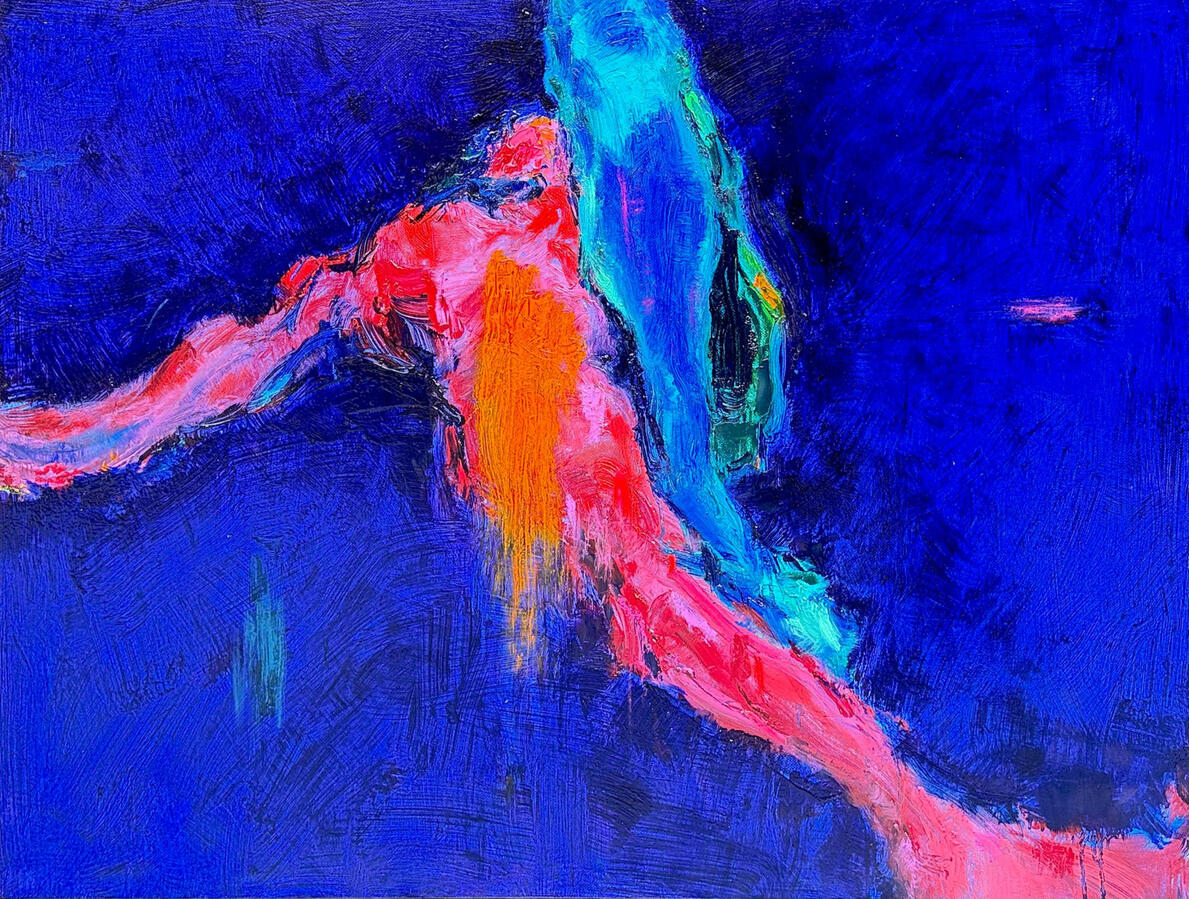
Oil painting-1200m X 130cm 2026
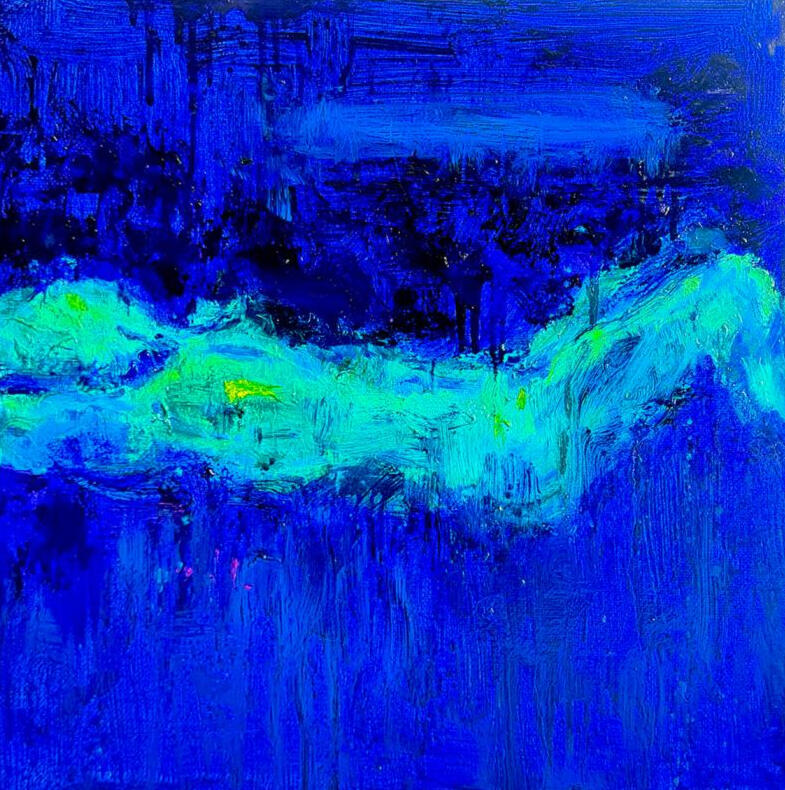
Oil painting-60cm X 60cm 2025

Oil painting-30cm X 60cm 2026


All conditioned phenomena are like dreams, illusions, bubbles, and shadows.
Creative inspiration and concept
My work began with a re-examination of the body. The body has never been merely flesh; it is a field where society, culture, and desire interweave—where a sensitive and ambiguous forbidden crevice lies between visibility and concealment. When we gaze at the body, we are also gazing at the hidden desires, struggles, and anxieties it carries; the rules governing this gaze are not innate but have been gradually shaped by an invisible discipline woven through upbringing, education, culture, and social order.
TextWhen creating the work, I tried to bring the visible and invisible aspects of the body together within a single image: letting the language of dreams sink into the canvas, letting traces of trauma emerge faintly through the layering of fabric and pigment. The image thus becomes a fissure—those unspeakable parts surface at once, in the very moment of being gazed upon.
TextHaving moved between many cities has made me especially sensitive to how the body is seen in urban life. The scenes by the window are at once reality and witness—testimony of a body disciplined time and again, and liberated time and again.
Email:[email protected]